Offshore wind cable connection engineering, explained plainly.
Plug & Go High Voltage covers dropper cables, preassembled connection systems, and the practical questions procurement and installation teams should be asking suppliers — written for people who actually spec and install this equipment, not for search engines. A recurring focus is factory testing: the cable and connector assemblies we cover are tested before shipping, not just tested on paper.
New here? Start with the complete guide — it links out to every topic covered on this site.
Latest articles
-
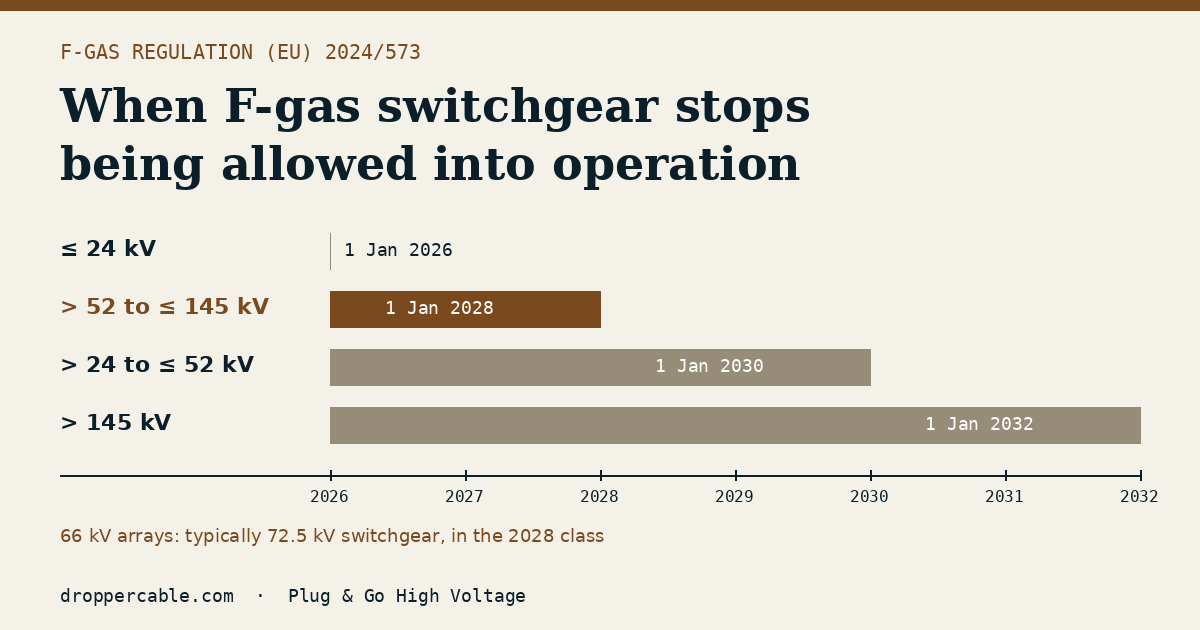 SF6-Free Switchgear in Offshore Turbines: What the EU 2028 Deadline Means for Dropper Cables
The EU F-gas rules phase out SF6 in 66kV-class switchgear from 2028. What that means for dropper cable interfaces, procurement and testing.
-
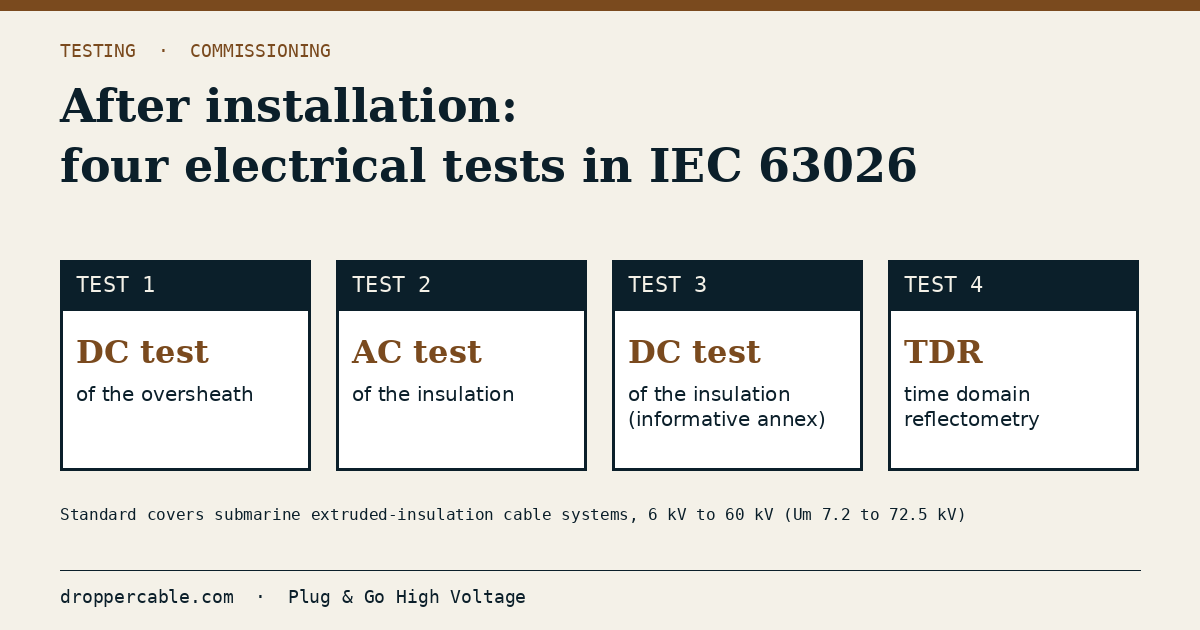 Dropper Cable After-Installation Testing: What to Specify Before Energisation
Factory tests prove the assembly left the plant intact. Here is what to specify for after-installation testing of dropper cables before a turbine is energised.
-
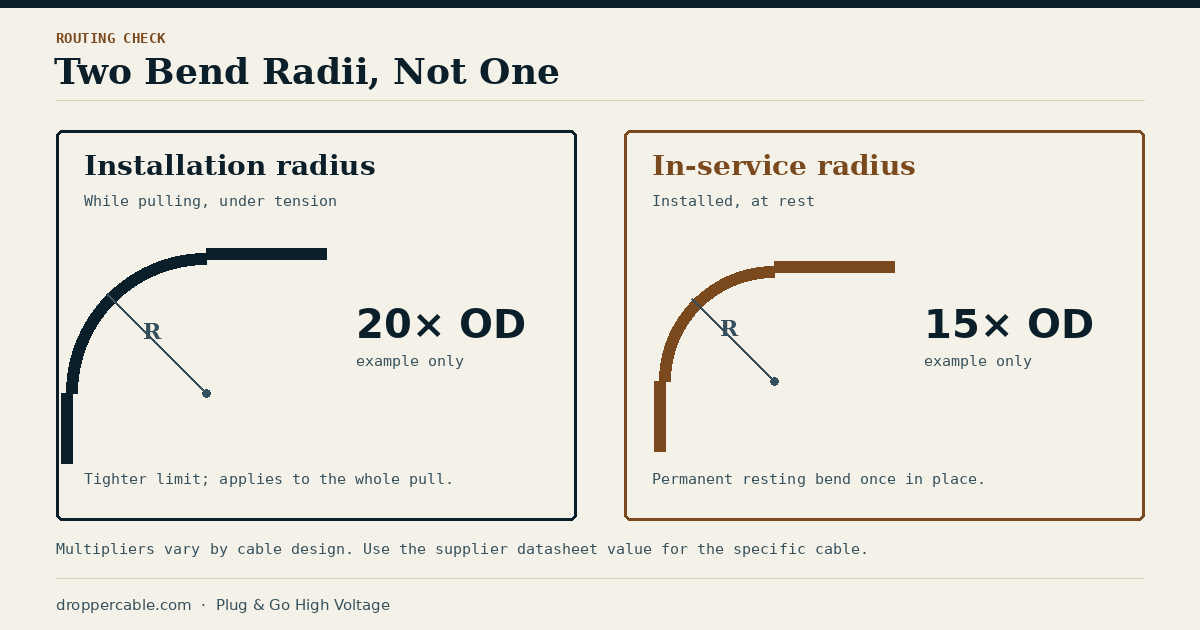 Dropper Cable Bend Radius: Reading the Spec Before You Plan the Route
Minimum bend radius sounds like one number. For a dropper cable it's at least two, and mixing them up is how routing plans fail on site.
-
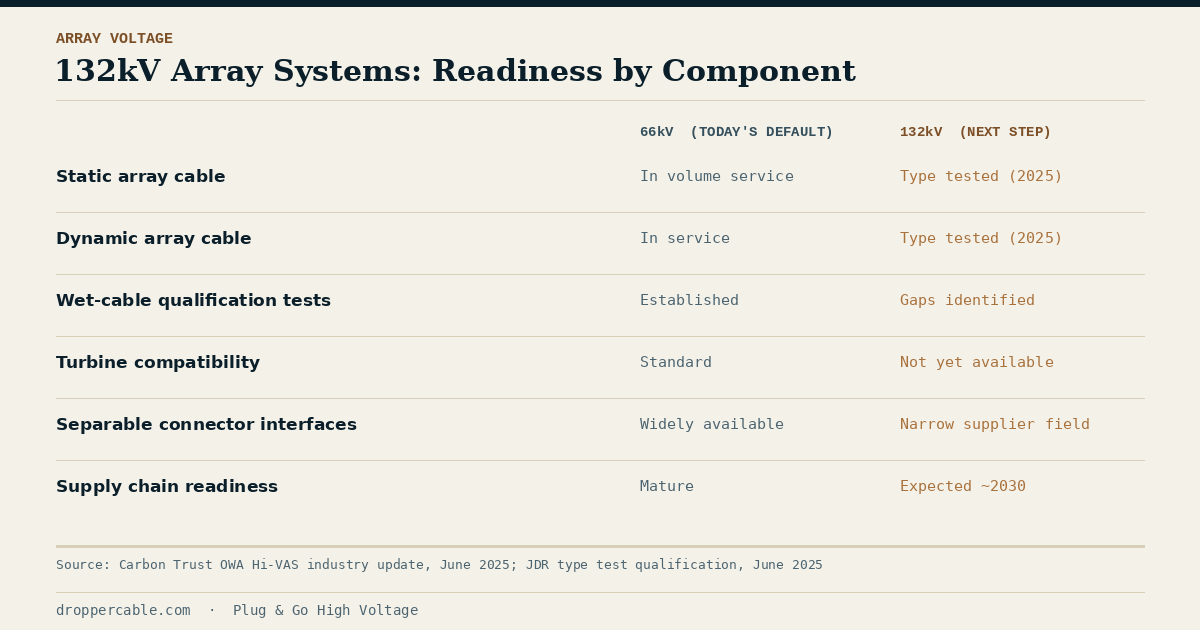 132kV Array Systems: What the Next Voltage Step Asks of Dropper Cables
What the Hi-VAS work concluded about 132kV array systems, where the qualification gaps sit, and what doubling voltage again asks of the turbine connection.
-
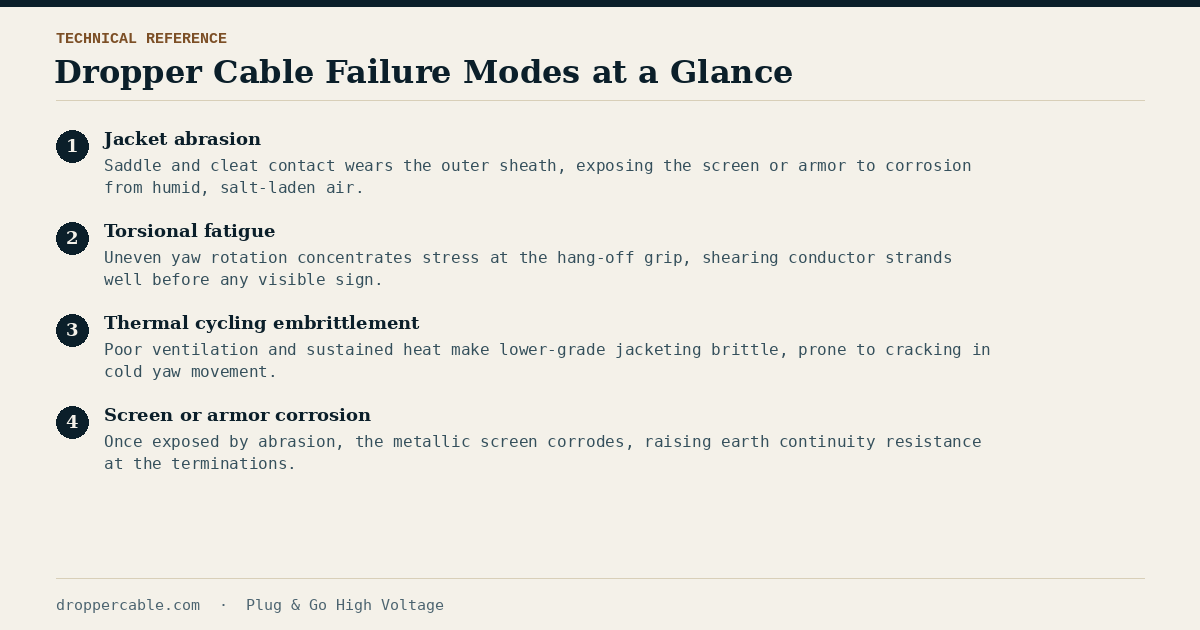 Dropper Cable Failure Modes: A Root Cause Reference
The four most common dropper cable failure modes, what causes each one mechanically, and what it looks like before it becomes an electrical fault.